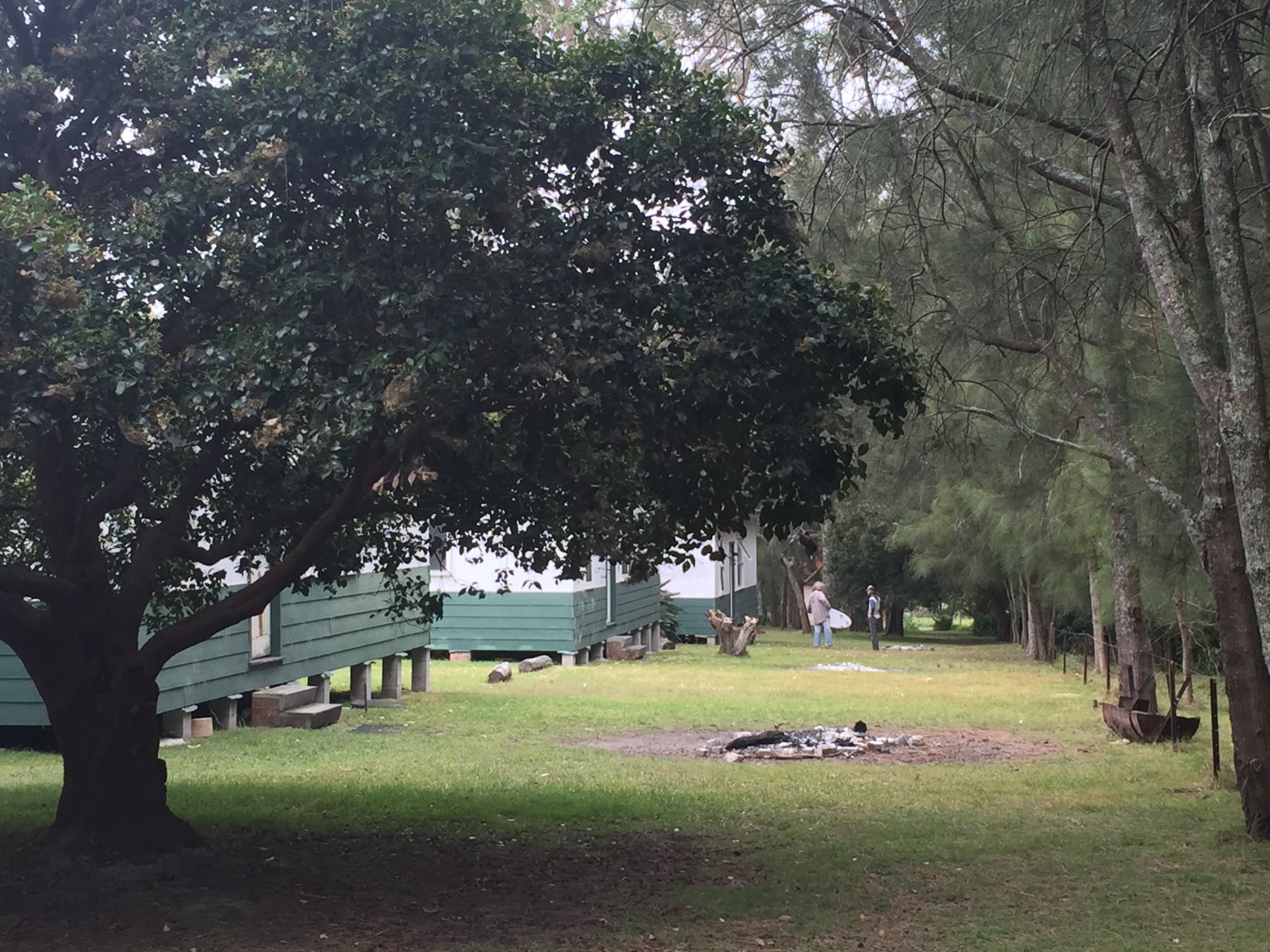
Fight for a retro icon: Don Hearn’s Cabins
Link to podcast on Don Hearn’s Cabins
Do you remember when summer holidays were characterised by a certain level of danger, discomfort and physical pain?
I’m talking about campgrounds where the hot water had always run out, lumpy bunk beds were designed to eject sleeping children in the middle of the night, and cabins where the key item of cooking equipment was inevitably one of those aluminium electric fry pans with two settings; stubbornly stone cold or as hot as the fires of hell.
I’m talking about sleepless nights spent tossing and turning on sunburnt skin that resembled a slice of coconut ice, pouring vinegar on blue bottle stings and extricating ticks with a blunt pair of tweezers.
Think dabbing Calamine lotion on your rash of sandfly bites and limping back to leaking, decrepit holiday houses after getting dumped in the surf.
Great fun, wasn’t it?
I decided to write a story about a rustic holiday camp on the South Coast of NSW at Cunjarong Point. The Don Hearn’s Cabins, it turns out, have a lot more to offer than pure 1960s nostalgia.
The cabins were built during the Vietnam moratoriums, by a strident peace activist, and has been a welcoming place for surfers, artists, eccentrics and families ever since.
The project has turned into a podcast, which, like a yarn around a campfire, seemed the best way to tell this story. I hope you will take a listen as the days of summer begin to wind down.
Like me you’ve probably noticed how all along the east coast of Australia double-storey buildings appointed with chrome and gleaming glass have sprung up to replace the fibro cottages and beach shacks that once ruled the quarter acre blocks on which they sat.
Today’s average holiday rental is a far cry from the shack of old, with lurid lino on the floor, a creaky flyscreen door, and, the height of luxury, a hammock swung between two trees out the back.
You can still see the occasional humble fibro houses in our coastal villages. They are painted in pastel colours with names like pale lime, pine frost, powder blue and coral pink.
More often than not, these retro gems are now dwarfed by modern beach mansions.
I find it curious that to be acceptable now, a beach house must be almost identical to the home you live in when you are not on holidays.
The sounds, sights and smells of the outside are kept at bay by double glazed windows and air-conditioning. The result is there is likely to be more time watching flat screen TV than swimming, wandering or foraging sticks for the fire.
The cabins have been under threat of closure for years now, with a concerted push on to save this beloved holiday spot.
Turtle talk: A week on Bare Sand Island
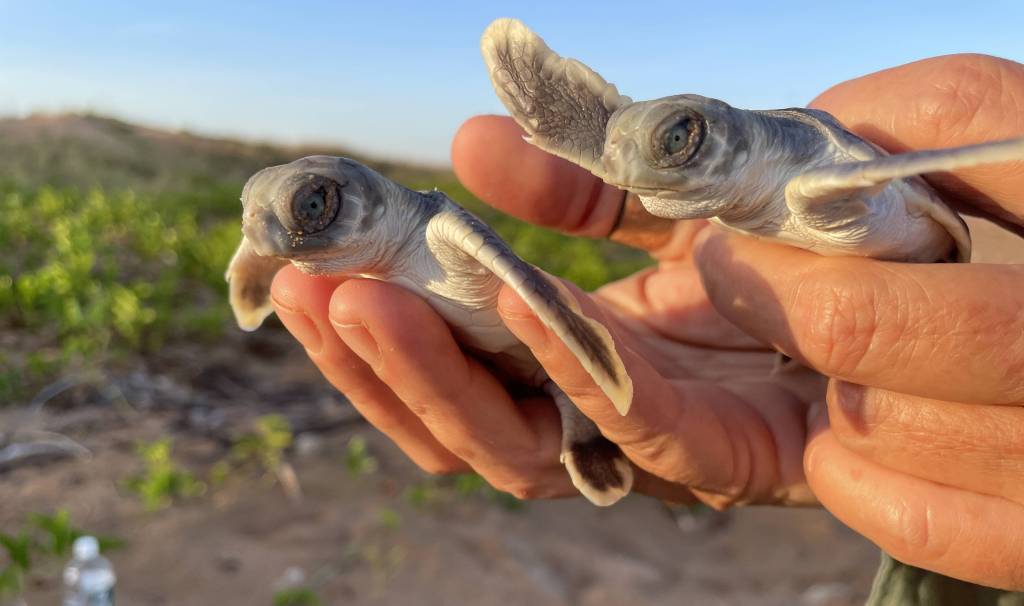
A tall, lanky AusTurtle volunteer races barefoot through a sandy campground, waving his arms and yelling at a seagull to drop the baby sea turtle it’s just plucked off the beach.
Surprisingly, the seagull obliges, and the hatchling is taken back to base camp to spend the day in a nice cool bucket of water. Later that night, it will be released into a moonlit sea.
This is all part of the entertainment during a week I spent in July, when I travelled 3,000 kms to a remote, windswept island off the coast of Darwin. The name, Bare Sand Island, doesn’t lie; it boasts only one tree. Hot winds blow fine drifts of sand that get into hair, eyes, tents, sleeping bags and food. Swimming is off the cards due to crocs and there are no showers and no phone or internet reception.
On the luxury scale, this is about as far as you can get from lying poolside with a drink in your hand, the usual type of break we look forward to in order to recharge from busy lives.
But when I volunteered to work on a week-long conservation camp, which mostly involved trudging through sand dunes at all hours of the day and night, it wasn’t about me. It was all about the turtles.
Once you arrive on the island, the moon and the tides are in charge, dictating when it’s time to hit the beach to measure, weigh and record data on these amazing endangered animals.
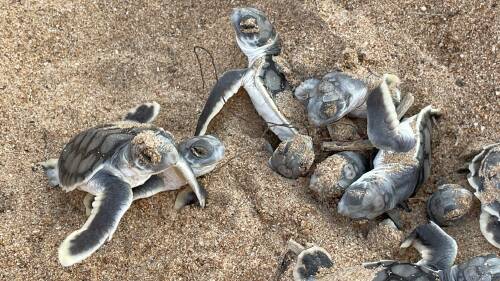
Life is dangerous for sea turtles. Freshly hatched turtles are retrieved from their nests by volunteers each morning and released into the sea in the evening. Photo by Kathy Sharpe.
In any one day you could be digging wriggly baby turtles from the sand, or observing a huge mother turtle as she plods up out of the sea to calmly lay her clutch of eggs in the dunes.
My week on Bare Sand Island was hot, exhausting, physically challenging and very often uncomfortable. But here’s the thing.
Afterwards, I felt more rejuvenated than I had in a long time.
Was it all that fresh air and exercise? Was it the dramatic sunsets and dazzling night skies? Was it the zero access to telecommunications?
On reflection, I realised that without the ever present distraction of the screen, like the turtles, my days became structured around high tide, low tide, sunset and moonrise.
The welfare of the turtles was the shared goal of everyone in our group, and we learned more and more about them under the supervision of the camp leaders.
Each day ended with a magical moment where we released the baby turtles and watched them waddle off into the dark water towards an uncertain fate.
It was also a moment that no amount of lazy hours by the pool could come close to.
Listening for the love song of an endangered bird
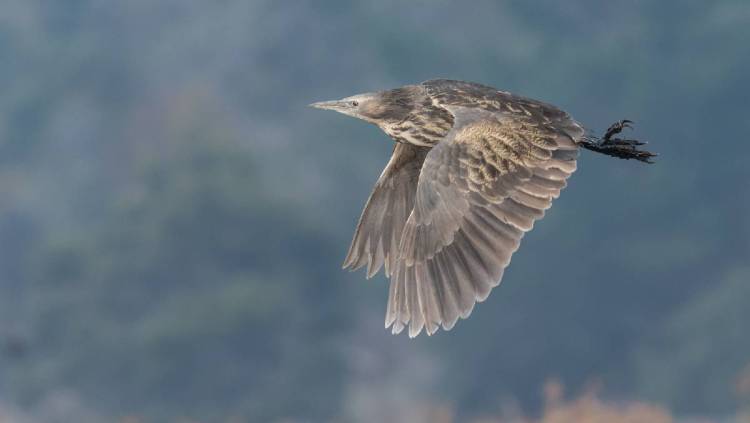
I am very keen on all things nature and I also enjoy writing about the natural world. I am interested in birds and am trying to improve my knowledge of the birds who, like me, live on the NSW South Coast. In late 2022 I took part in the Australasian Bittern listening survey, which turned out to be a great experience and one I wrote about for publications in ACM.
The Real Social Media Pioneers

There are many charming traditions attached to country newspapers, but one of my favourite has always been that of the social columnist. Up until the last decade or so, an army of unpaid writers faithfully delivered their columns to local newspapers across Australia each week. Their work helps paint a unique picture of community life in their own town and reflected the time in which they wrote. I interviewed three such writers some years ago, and while two of my subjects have since passed away, I hope they and others like them will be remembered as the social historians they were. My story, The Real Social Media Pioneers won first place in the NSW Society of Women Writers writing competition in the non-fiction category. The Society has been going since 1925 and category judge Susan Steggall said the organisation was founded by four female journalists to support women in professional and creative writing endeavours.
An appetite for life and art
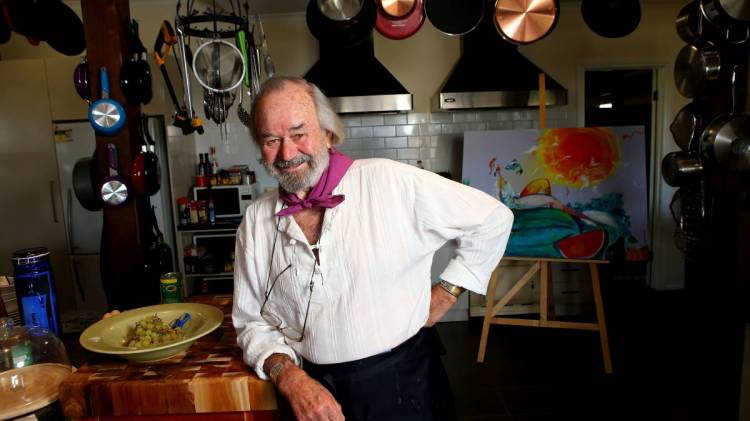
Some people are just a delight to interview. Peter Russell Clarke is very candid and likes to deliver shocking one liners, many of which are not publishable. PRC phoned me for a chat a few times in the months that followed the publication of this story, in which he revealed that he had lived on the streets for a time during his youth. While most people think of him primarily as a chef, he is a very talented artist and writer with the gift of the gab, and his conversation is as colourful as his life.
Lasting effects for the children of black summer
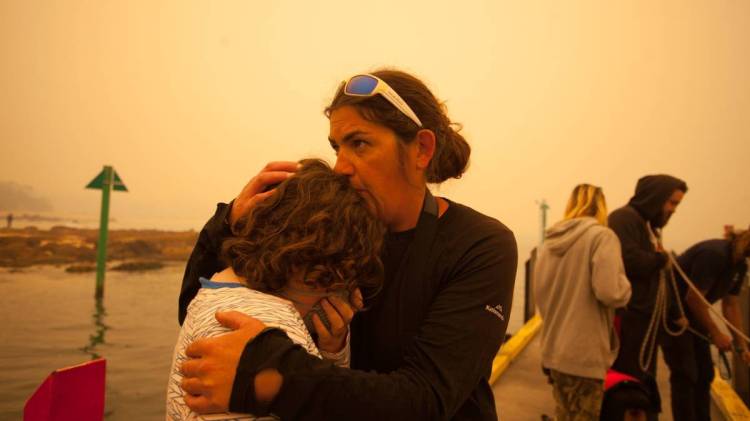
After working with ACM’s journalists throughout the black summer bushfires, I started to wonder about the lasting effect on children of the images, sounds and fear they experienced. I wrote about the children of black summer, a story augmented by wonderful pictures from Mallacoota photographer Rachael Mounsey who docmented the fires in her own community.
Q Station and the ghosts of pandemics past
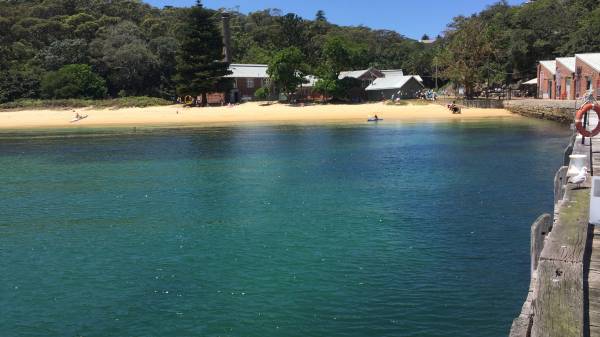
Q Station on Manly’s North Head is a hotel resort built on the site of Sydney’s original quarantine station. During a holiday there, I learned about the history of past pandemics, and was shocked at how border closures, masks, handwashing and curfews are still our basic defences against infection. Read more here.
 kathysharpe.com.au